UNFCCC-CASTT Adaptation Academy in Asia and the Pacific 2026
Climate Transparency and Adaptation Action: Advancing Adaptation Transparency under the ETF — Preparing for BTR2 and the 2027 Review Cycle
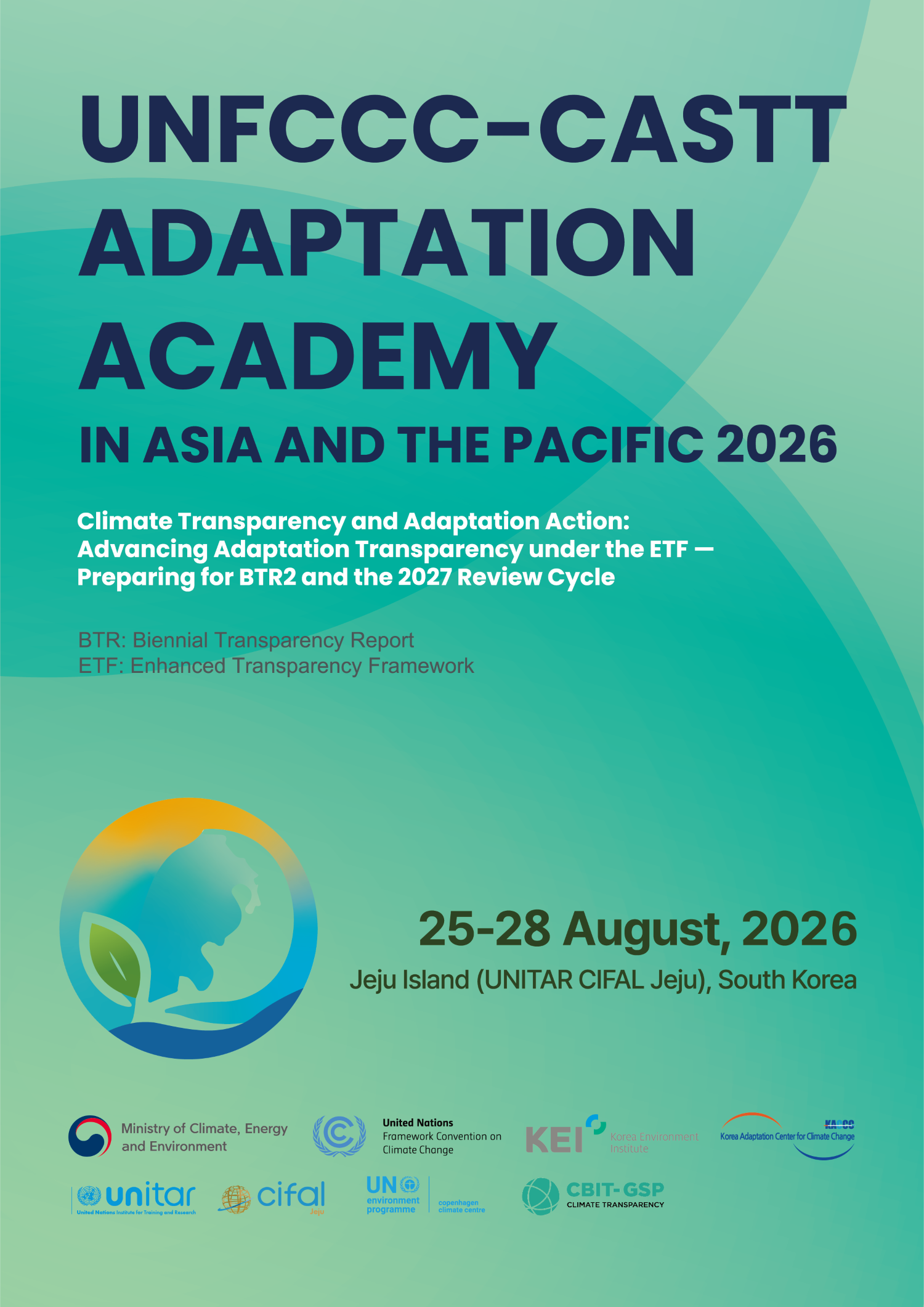
Programme Title : UNFCCC-CASTT Adaptation Academy in Asia and the Pacific 2026 Theme : Climate Transparency and Adaptation Action: Advancing Adaptation Transparency under the ETF — Preparing for BTR2 and the 2027 Review Cycle Date : 25–28 August 2026 Venue : Jeju Island, Republic of Korea Format : Four-day in-person international training Hosted by : Ministry of Climate, Energy and Environment of the Republic of Korea (MCEE Korea) Partners (Organisers) : Secretariat of the United Nations Framework Convention on Climate Change (UNFCCC); Korea Environment Institute – Korea Adaptation Center for Climate Change (KEI KACCC); United Nations Institute for Training and Research (UNITAR) CIFAL Jeju / Jeju International Training Center (JITC); UNEP Copenhagen Climate Centre (UNEP CCC) Sponsored by : Ministry of Foreign Affairs of the Republic of Korea (MOFA Korea), Jeju Special Self-Governing Province |
About the Programme
The Ministry of Climate, Energy and Environment of the Republic of Korea (MCEE Korea), in partnership with the Secretariat of the United Nations Framework Convention on Climate Change (UNFCCC), Korea Environment Institute–Korea Adaptation Center for Climate Change (KEI KACCC), United Nations Institute for Training and Research (UNITAR) CIFAL Jeju / Jeju International Training Centre (JITC), and UNEP Copenhagen Climate Centre (UNEP CCC), is pleased to announce the UNFCCC-CASTT Adaptation Academy in Asia and the Pacific 2026.
The Climate Action and Support Transparency Training (CASTT) Adaptation Academy is a regional capacity-building initiative launched in 2021 by the UNFCCC secretariat in collaboration with research and training institutions. Since then, it has trained more than 200 professionals from developing countries across Asia and the Pacific, building a growing regional network of adaptation practitioners.
The 2026 edition comes at an important stage in the evolution of adaptation reporting under the Enhanced Transparency Framework (ETF) of the Paris Agreement. As Parties draw lessons from their first Biennial Transparency Reports (BTRs), engage with Technical Expert Reviews (TERs), and prepare for future reporting cycles, there is growing demand for stronger, more coherent, and more policy-relevant adaptation-related reporting.
In response, the 2026 Academy is designed as an advanced yet accessible programme to strengthen participants’ practical understanding of climate adaptation reporting under the ETF. The programme will focus on improving coherence across adaptation-related frameworks, strengthening approaches to reporting adaptation actions and progress, and drawing lessons from country experience and emerging review processes.
Building on five years of Academy experience, the 2026 programme will provide a platform for practical learning, regional exchange, and professional networking among adaptation practitioners. It will support participants in strengthening both the technical and institutional foundations needed to prepare more coherent, policy-relevant, and review-ready adaptation-related information under the ETF.
The Academy will be held from 25 to 28 August 2026 in Jeju, Republic of Korea, as part of the 2026 Green and Climate Capacity Development Week for Asia and the Pacific hosted by UNITAR CIFAL Jeju. Approximately 15 participants from developing countries across Asia and the Pacific are expected to join the programme. To support inclusive participation, selected participants will receive financial support covering international airfare, accommodation, and daily subsistence allowance.
Programme Focus
The 2026 Academy will focus on:
ensuring participants are equipped to stay informed of the latest UNFCCC adaptation-related decisions
strengthening practical understanding of climate adaptation reporting under the ETF;
improving coherence across BTRs, NAPs, NCs, NDCs, and related national processes to reduce duplication and support stronger institutional coordination;
enhancing approaches to reporting adaptation actions, progress, and results, including the use of evidence, indicators, and clear narratives;
drawing lessons from first-round BTRs and related review processes to identify good practices and practical areas for improvement; and
promoting peer learning through country experience sharing, workshops, and regional exchange.
Target Participants
Government officials and practitioners from developing countries in Asia and the Pacific working on climate change adaptation and transparency reporting
National focal points or ministry officials involved in adaptation-related reporting, planning, or coordination
Professionals engaged in or preparing for processes related to BTRs, NAPs, NDCs, or related adaptation frameworks
Certificates
Host and partners (organisers)* of the UNFCCC-CASTT Adaptation Academy in Asia and the Pacific 2026 will issue a joint Certificate of Completion to participants upon successful completion of the training and fulfilment of the following requirements:
Attend and actively participate in all sessions
Submit the designated assignments
Complete the in-session participant exercise and presentation
Complete all assigned workshop surveys
Agenda
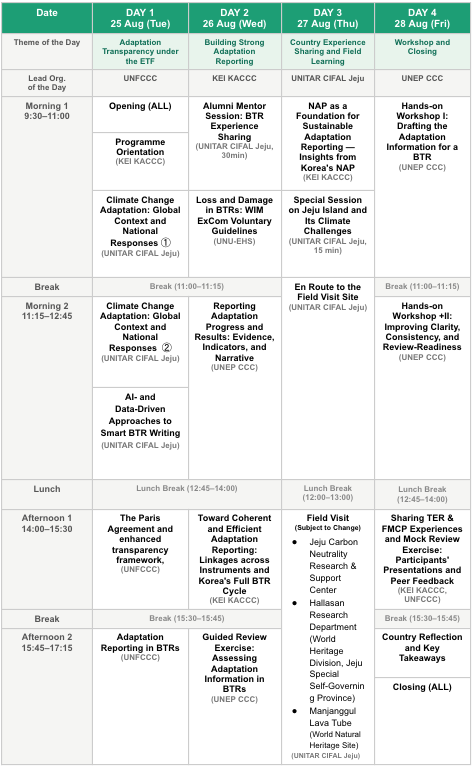
Programme Outcome
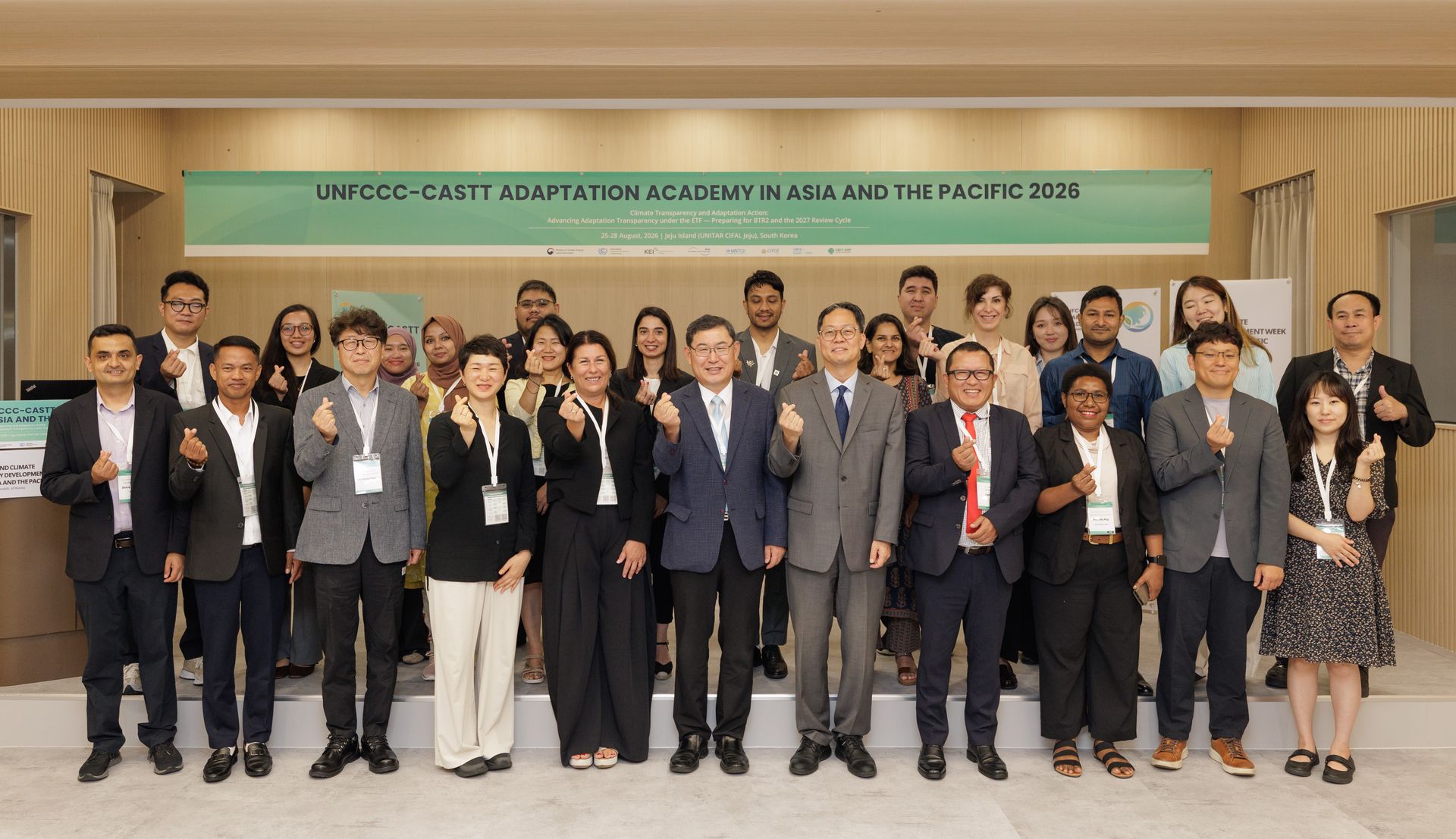
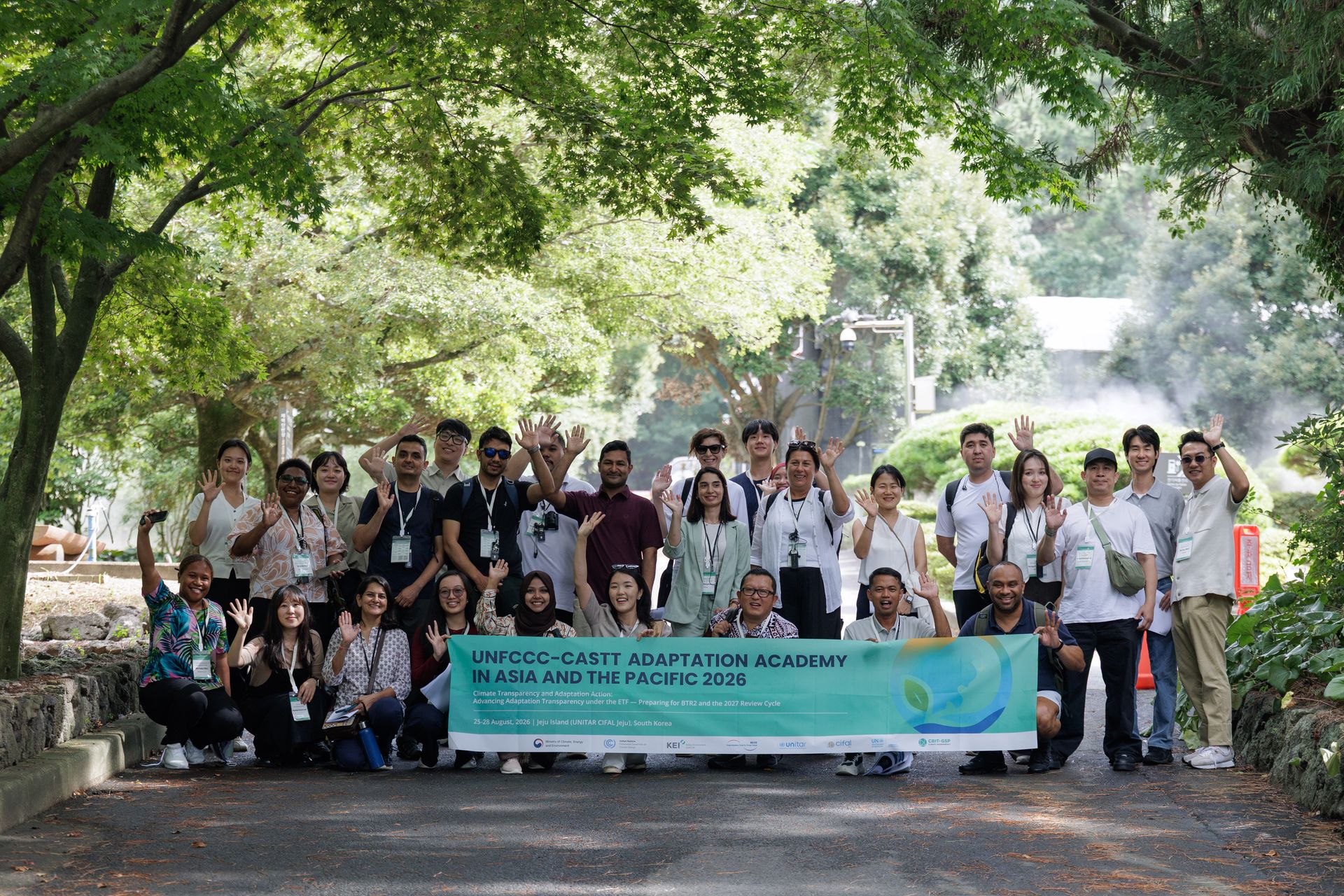
Week 1 of the 2026 Green and Climate Capacity Development Week welcomed the UNFCCC CASTT Adaptation Academy in Asia and the Pacific 2026, hosted by the Ministry of Climate, Energy and Environment of the Republic of Korea (MCEE Korea) and co-organized by the Secretariat of the United Nations Framework Convention on Climate Change (UNFCCC), the Korea Environment Institute Korea Adaptation Center for Climate Change (KEI KACCC), the United Nations Institute for Training and Research (UNITAR) CIFAL Jeju / Jeju International Training Centre (JITC), and the UNEP Copenhagen Climate Centre (UNEP CCC).
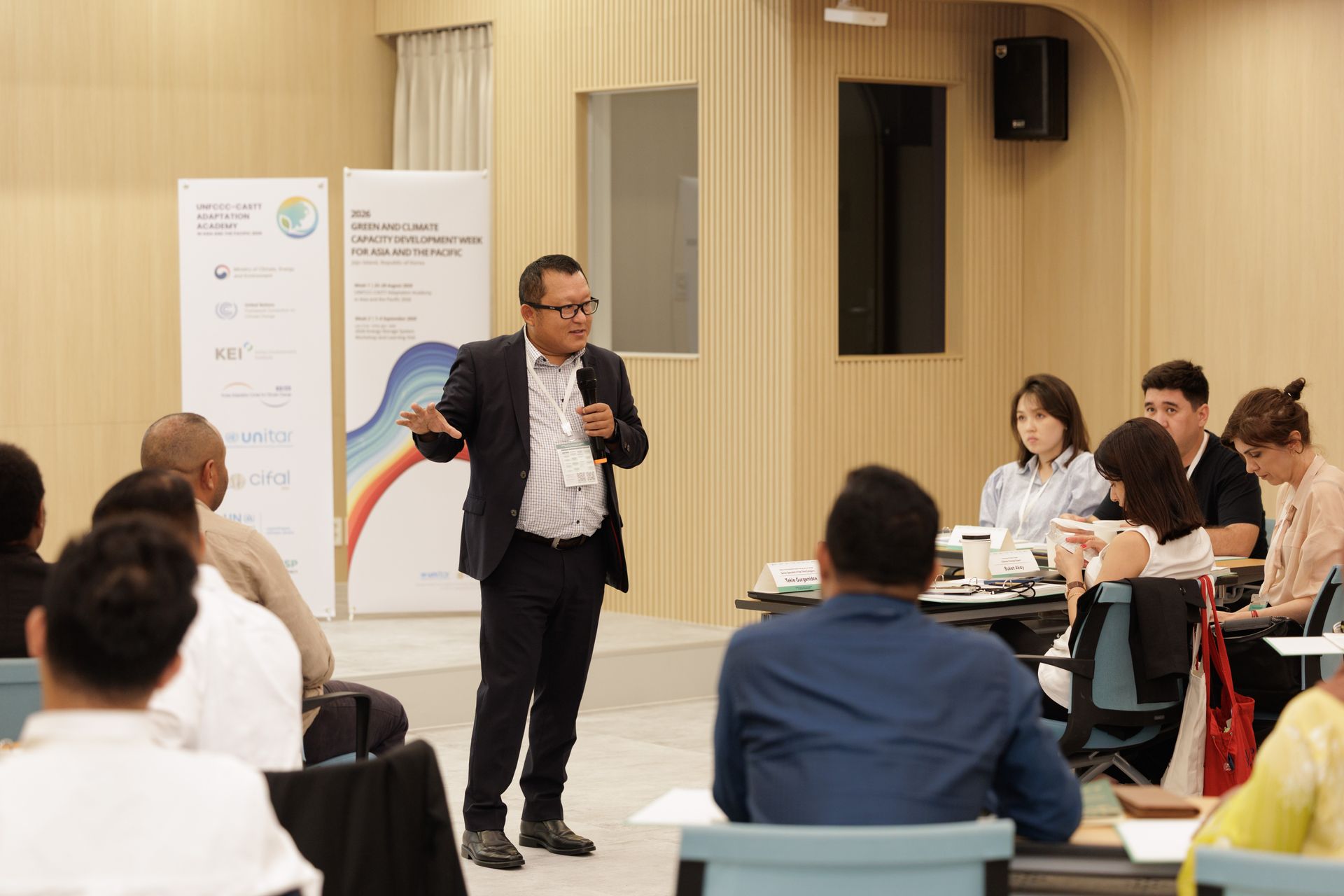
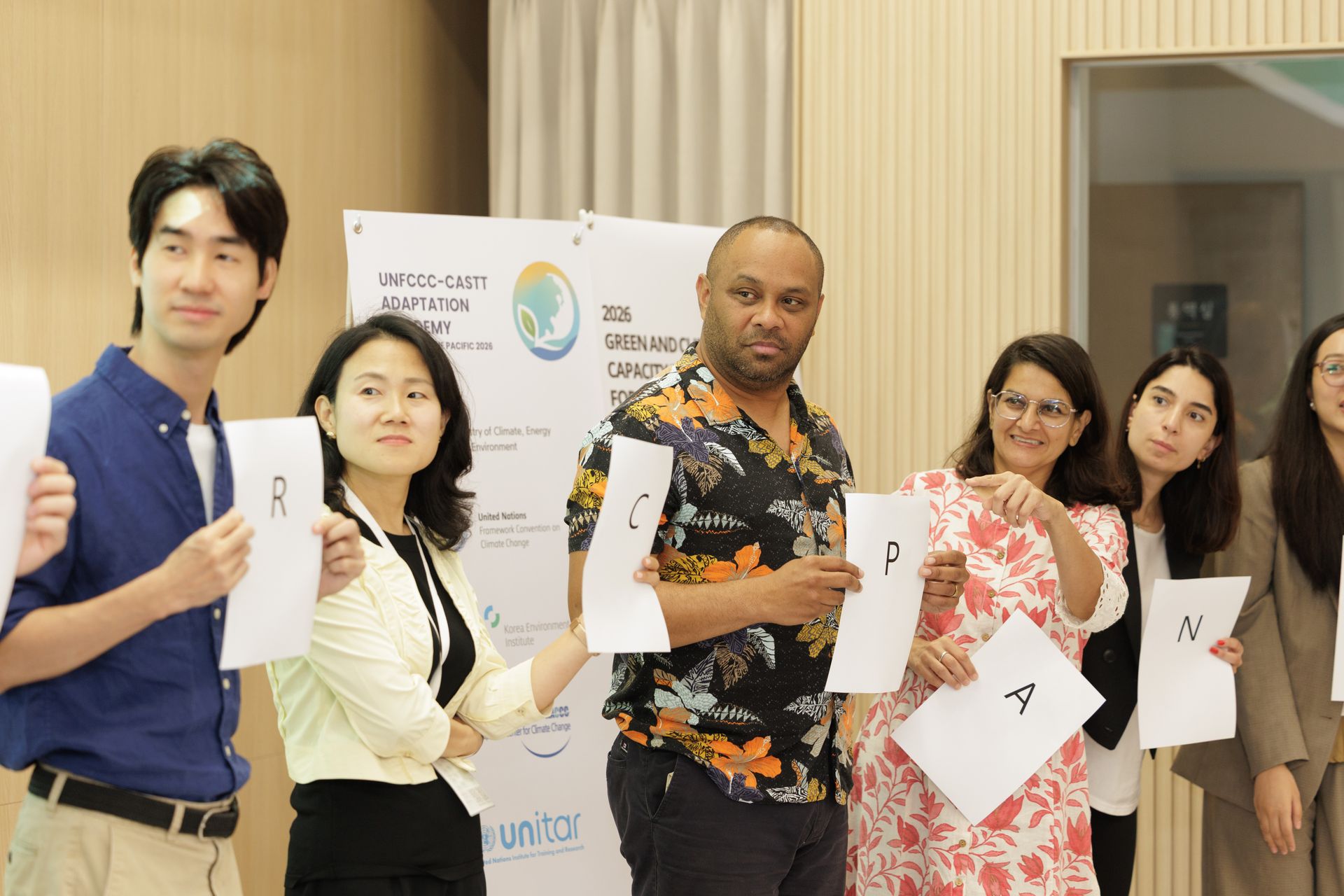
The Academy opened with a keynote lecture on global climate change adaptation delivered by IPCC author Dr. Tae Sung Cheong. Following the keynote, participants moved into the core capacity development programme, beginning their journey to enhance and improve their adaptation reporting under the Paris Agreement's Enhanced Transparency Framework (ETF). This included an introduction by the UNFCCC Secretariat to the Paris Agreement, the ETF, and adaptation reporting requirements under Biennial Transparency Reports (BTRs); a case sharing session on the Republic of Korea's National Adaptation Plan and its full BTR cycle; and a field visit and applied learning component designed to broaden participants' understanding of climate adaptation across both vertical and horizontal dimensions.
Building on the spirit of peer learning, two alumni from the 2025 Academy returned this year to share their progress since completing the programme, along with the lessons learned and challenges encountered along the way, offering valuable insights for this year's cohort, including their demonstration of potential national MRV systems that could support climate adaptation reporting.
A central feature of the Academy was its practical, applied approach: ahead of the programme, participants were asked to complete a self-assessment of the adaptation section of their BTRs as a pre assignment. Throughout the week, they examined the current status of their adaptation reporting and, with guidance from experts, developed structured plans to strengthen it going forward.
The Academy was further distinguished by dedicated sessions introducing participants to, and sharing experiences on, upcoming international processes under the ETF, including the Technical Expert Review (TER) and the Facilitative Multilateral Consideration of Progress, helping equip participants to respond effectively when these processes arise.
More Information
For further information, please visit: UNFCCC CASTT Programme Page.
For enquiries, please contact: Ms. Chaeyeon Kim (cifaljeju.jitc.env@gmail.com)


UNFCCC-CASTT Adaptation Academy in Asia and the Pacific 2026
Climate Transparency and Adaptation Action: Advancing Adaptation Transparency under the ETF — Preparing for BTR2 and the 2027 Review Cycle
Programme Title : UNFCCC-CASTT Adaptation Academy in Asia and the Pacific 2026
Theme : Climate Transparency and Adaptation Action: Advancing Adaptation Transparency under the ETF — Preparing for BTR2 and the 2027 Review Cycle
Date : 25–28 August 2026
Venue : Jeju Island, Republic of Korea
Format : Four-day in-person international training
Hosted by : Ministry of Climate, Energy and Environment of the Republic of Korea (MCEE Korea)
Partners (Organisers) : Secretariat of the United Nations Framework Convention on Climate Change (UNFCCC); Korea Environment Institute – Korea Adaptation Center for Climate Change (KEI KACCC); United Nations Institute for Training and Research (UNITAR) CIFAL Jeju / Jeju International Training Center (JITC); UNEP Copenhagen Climate Centre (UNEP CCC)
Sponsored by : Ministry of Foreign Affairs of the Republic of Korea (MOFA Korea), Jeju Special Self-Governing Province
About the Programme
The Ministry of Climate, Energy and Environment of the Republic of Korea (MCEE Korea), in partnership with the Secretariat of the United Nations Framework Convention on Climate Change (UNFCCC), Korea Environment Institute–Korea Adaptation Center for Climate Change (KEI KACCC), United Nations Institute for Training and Research (UNITAR) CIFAL Jeju / Jeju International Training Centre (JITC), and UNEP Copenhagen Climate Centre (UNEP CCC), is pleased to announce the UNFCCC-CASTT Adaptation Academy in Asia and the Pacific 2026.
The Climate Action and Support Transparency Training (CASTT) Adaptation Academy is a regional capacity-building initiative launched in 2021 by the UNFCCC secretariat in collaboration with research and training institutions. Since then, it has trained more than 200 professionals from developing countries across Asia and the Pacific, building a growing regional network of adaptation practitioners.
The 2026 edition comes at an important stage in the evolution of adaptation reporting under the Enhanced Transparency Framework (ETF) of the Paris Agreement. As Parties draw lessons from their first Biennial Transparency Reports (BTRs), engage with Technical Expert Reviews (TERs), and prepare for future reporting cycles, there is growing demand for stronger, more coherent, and more policy-relevant adaptation-related reporting.
In response, the 2026 Academy is designed as an advanced yet accessible programme to strengthen participants’ practical understanding of climate adaptation reporting under the ETF. The programme will focus on improving coherence across adaptation-related frameworks, strengthening approaches to reporting adaptation actions and progress, and drawing lessons from country experience and emerging review processes.
Building on five years of Academy experience, the 2026 programme will provide a platform for practical learning, regional exchange, and professional networking among adaptation practitioners. It will support participants in strengthening both the technical and institutional foundations needed to prepare more coherent, policy-relevant, and review-ready adaptation-related information under the ETF.
The Academy will be held from 25 to 28 August 2026 in Jeju, Republic of Korea, as part of the 2026 Green and Climate Capacity Development Week for Asia and the Pacific hosted by UNITAR CIFAL Jeju. Approximately 15 participants from developing countries across Asia and the Pacific are expected to join the programme. To support inclusive participation, selected participants will receive financial support covering international airfare, accommodation, and daily subsistence allowance.
Programme Focus
The 2026 Academy will focus on:
ensuring participants are equipped to stay informed of the latest UNFCCC adaptation-related decisions
strengthening practical understanding of climate adaptation reporting under the ETF;
improving coherence across BTRs, NAPs, NCs, NDCs, and related national processes to reduce duplication and support stronger institutional coordination;
enhancing approaches to reporting adaptation actions, progress, and results, including the use of evidence, indicators, and clear narratives;
drawing lessons from first-round BTRs and related review processes to identify good practices and practical areas for improvement; and
promoting peer learning through country experience sharing, workshops, and regional exchange.
Target Participants
Government officials and practitioners from developing countries in Asia and the Pacific working on climate change adaptation and transparency reporting
National focal points or ministry officials involved in adaptation-related reporting, planning, or coordination
Professionals engaged in or preparing for processes related to BTRs, NAPs, NDCs, or related adaptation frameworks
Certificates
Host and partners (organisers)* of the UNFCCC-CASTT Adaptation Academy in Asia and the Pacific 2026 will issue a joint Certificate of Completion to participants upon successful completion of the training and fulfilment of the following requirements:
Attend and actively participate in all sessions
Submit the designated assignments
Complete the in-session participant exercise and presentation
Complete all assigned workshop surveys
Agenda
Programme Outcome
Week 1 of the 2026 Green and Climate Capacity Development Week welcomed the UNFCCC CASTT Adaptation Academy in Asia and the Pacific 2026, hosted by the Ministry of Climate, Energy and Environment of the Republic of Korea (MCEE Korea) and co-organized by the Secretariat of the United Nations Framework Convention on Climate Change (UNFCCC), the Korea Environment Institute Korea Adaptation Center for Climate Change (KEI KACCC), the United Nations Institute for Training and Research (UNITAR) CIFAL Jeju / Jeju International Training Centre (JITC), and the UNEP Copenhagen Climate Centre (UNEP CCC).
The Academy opened with a keynote lecture on global climate change adaptation delivered by IPCC author Dr. Tae Sung Cheong. Following the keynote, participants moved into the core capacity development programme, beginning their journey to enhance and improve their adaptation reporting under the Paris Agreement's Enhanced Transparency Framework (ETF). This included an introduction by the UNFCCC Secretariat to the Paris Agreement, the ETF, and adaptation reporting requirements under Biennial Transparency Reports (BTRs); a case sharing session on the Republic of Korea's National Adaptation Plan and its full BTR cycle; and a field visit and applied learning component designed to broaden participants' understanding of climate adaptation across both vertical and horizontal dimensions.
Building on the spirit of peer learning, two alumni from the 2025 Academy returned this year to share their progress since completing the programme, along with the lessons learned and challenges encountered along the way, offering valuable insights for this year's cohort, including their demonstration of potential national MRV systems that could support climate adaptation reporting.
A central feature of the Academy was its practical, applied approach: ahead of the programme, participants were asked to complete a self-assessment of the adaptation section of their BTRs as a pre assignment. Throughout the week, they examined the current status of their adaptation reporting and, with guidance from experts, developed structured plans to strengthen it going forward.
The Academy was further distinguished by dedicated sessions introducing participants to, and sharing experiences on, upcoming international processes under the ETF, including the Technical Expert Review (TER) and the Facilitative Multilateral Consideration of Progress, helping equip participants to respond effectively when these processes arise.
More Information
For further information, please visit: UNFCCC CASTT Programme Page.
For enquiries, please contact: Ms. Chaeyeon Kim (cifaljeju.jitc.env@gmail.com)